Is chronic tendon or soft tissue pain keeping you from the activities you want to do?
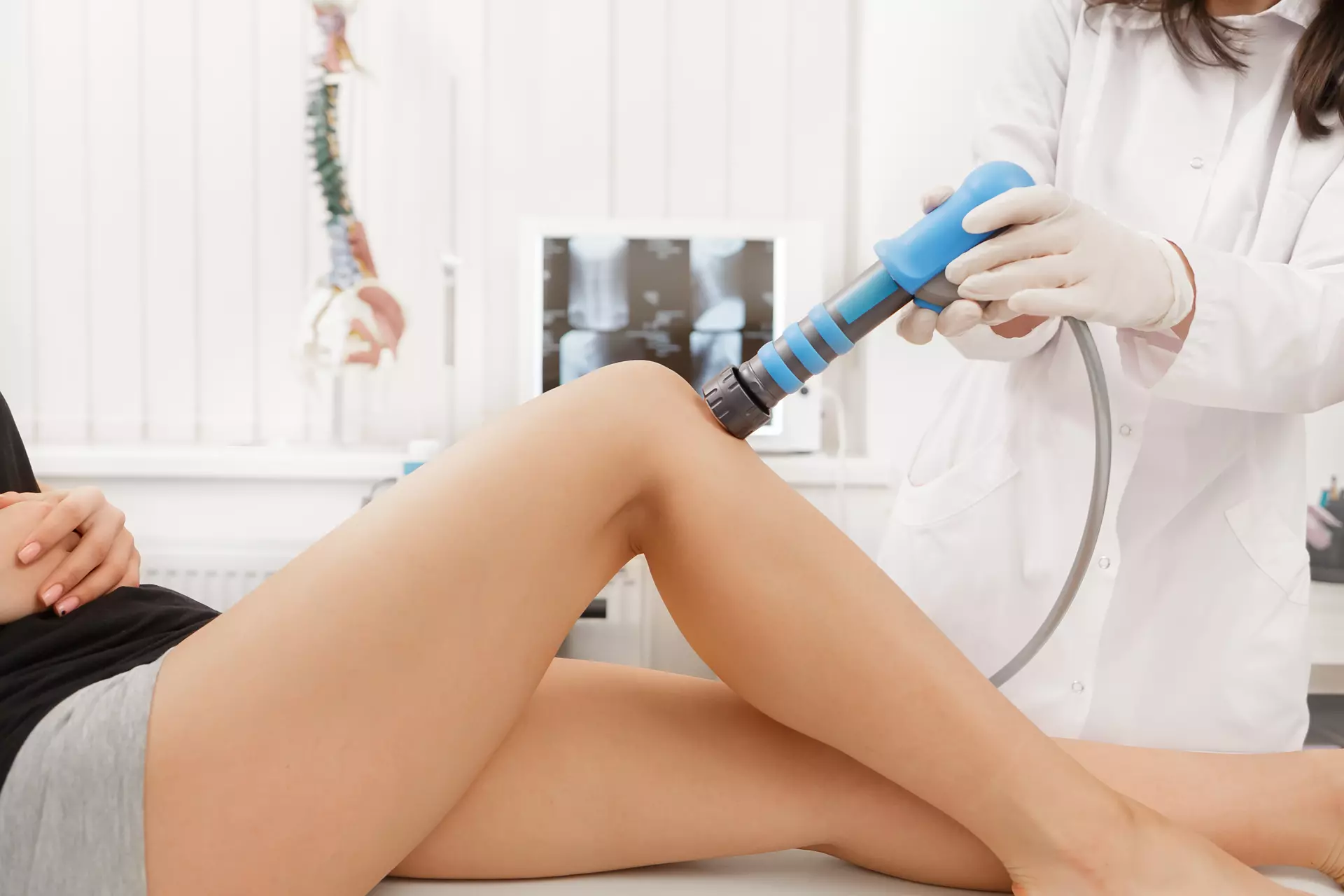
Shockwave therapy, also called ESWT, uses targeted acoustic energy to stimulate healing in tissue that has become slow to recover.
With Dr. Borys, shockwave therapy is performed in-office and is often paired with diagnostic ultrasound to help identify the right treatment area and support a more precise treatment plan.
Book an Initial Visit
Call (360) 738-3230
What Is Shockwave Therapy?
Shockwave therapy is a non-invasive treatment that delivers controlled acoustic pulses into injured or chronically irritated tissue. It is commonly used for persistent tendon and soft tissue conditions that have not improved enough with rest, physical therapy, activity modification, or other conservative care.
Shockwave therapy does not involve injections, anesthesia, or surgery. The goal is to stimulate healing, reduce pain, and improve function over time.
Conditions Shockwave Therapy May Help
- Plantar fasciitis — chronic heel or arch pain
- Achilles tendinopathy — persistent Achilles pain or thickening
- Tennis elbow (lateral epicondylitis) — outer elbow pain from repetitive strain
- Golfer’s elbow (medial epicondylitis) — inner elbow pain
- Calcific shoulder tendinitis — calcium deposits in the rotator cuff tendons
- Patellar tendinopathy (jumper’s knee) — pain below the kneecap
- Greater trochanteric pain syndrome — lateral hip pain
- Chronic myofascial trigger points — persistent muscle tightness and referred pain
If your condition is not listed here, it may still be worth a conversation. A careful evaluation is the best way to determine whether shockwave therapy is a good fit for your situation.
Why Choose Shockwave Therapy with Dr. Borys
Ultrasound-informed treatment planning. Diagnostic musculoskeletal ultrasound is often used to assess the tissue involved and help confirm the treatment target. This can improve clarity around what is actually driving pain and whether shockwave therapy makes sense.
In-office, non-invasive treatment. Shockwave therapy is performed in the office, takes only a few minutes per session, and does not require injections, anesthesia, or downtime.
Extensive regenerative training and experience. Dr. Borys has spent more than a decade focused on non-surgical orthopedic and pain care, with advanced training through the Hackett Hemwall Patterson Foundation and hundreds of hours of continuing education in regenerative medicine.
Continuity of care. You see the same physician from evaluation through treatment and follow-up. There is no handoff to a separate technician or provider between visits.
Thoughtful treatment planning. For some patients, shockwave therapy works well on its own. For others, it may be part of a broader plan that could include rehabilitation, PRP, prolotherapy, or other conservative care.
How Shockwave Therapy Works
- Evaluation and, when helpful, diagnostic ultrasound to assess the tissue and determine candidacy.
- Application of the shockwave device over the treatment area.
- Delivery of controlled acoustic pulses into the affected tissue.
- Progressive treatment over a series of visits, when indicated.
- Ongoing reassessment based on symptoms, function, and response.
A typical treatment session lasts about 5 to 10 minutes, though the overall visit may be longer depending on the evaluation and treatment area.
What to Expect After Treatment
Day 0–2: It is common to feel mild soreness or sensitivity in the treated area. This is usually temporary.
Weeks 1–4: Some patients notice early improvement in pain or function during this period.
Weeks 4–12+: Improvement may continue gradually over time as tissue remodeling progresses. More chronic or longstanding conditions may take longer to respond.
Most patients return to normal daily activities right away. I generally recommend avoiding anti-inflammatory medications such as ibuprofen for about 48 hours after treatment, since part of the treatment effect depends on your body’s natural healing response.
Pricing and Visits
Shockwave therapy is $150 per session.
Many treatment plans involve a series of 3 to 5 sessions, typically spaced 1 to 2 weeks apart, depending on the condition, chronicity, and response.
Shockwave therapy is generally a cash-pay service and is not typically covered by insurance. You will receive clear guidance during your visit about whether it is a reasonable option for your condition and what kind of treatment course may make sense.
Is Shockwave Therapy Backed by Research?
Shockwave therapy is well studied in musculoskeletal medicine, especially for chronic tendon disorders and plantar fasciitis. The evidence is strongest for conditions such as plantar fasciitis, Achilles tendinopathy, lateral epicondylitis, and calcific shoulder tendinitis.
That said, shockwave therapy is not the right choice for every diagnosis, and results vary depending on the tissue involved, severity, duration of symptoms, and individual factors. Part of a careful evaluation is being straightforward about whether ESWT is likely to help in your specific case and when a different treatment approach might make more sense.
Is Shockwave Therapy Right for You?
Shockwave therapy may be a good fit for people with chronic tendon or soft tissue pain who want a non-surgical treatment option and have not found enough improvement with rest, physical therapy, or other conservative care alone.
It is often most useful when symptoms have lingered for months, especially in tendon-related conditions where healing has stalled.
A consultation and, when appropriate, in-clinic musculoskeletal ultrasound with Dr. Borys is the first step in determining whether shockwave therapy is an appropriate option for your condition.
Book an Initial Visit
Call (360) 738-3230
Frequently Asked Questions
How many shockwave therapy sessions will I need?
Many patients are treated with a series of 3 to 5 sessions spaced 1 to 2 weeks apart. In some cases, fewer or more sessions may make sense depending on the condition and response.
Is shockwave therapy painful?
Most patients describe the sensation as a firm tapping or pulsing feeling. It is usually tolerable, and the intensity can be adjusted during treatment.
Is there downtime after shockwave therapy?
There is typically no downtime. Most patients return to normal daily activities right away, though the treated area may feel sore for a day or two.
Why is diagnostic ultrasound helpful?
Ultrasound can help identify the involved tissue, improve treatment planning, and confirm whether shockwave therapy is being directed at the right structure.
Can shockwave therapy be combined with other treatments?
Yes. Depending on the diagnosis, shockwave therapy may be combined with rehabilitation, PRP, prolotherapy, or other conservative treatments as part of a broader plan.
When will I notice improvement?
Some patients notice change within the first few weeks, while others improve more gradually over 4 to 12 weeks or longer as tissue remodeling continues.
Who is not a good candidate for shockwave therapy?
Shockwave therapy may not be appropriate in some situations, including pregnancy, active infection in the treatment area, certain implanted devices, bleeding risk, or other medical considerations. A review of your history is part of determining whether treatment is appropriate.
Ready to find out if shockwave therapy may help?
The first step is a careful evaluation, not a commitment to treatment. Book an initial visit, and we will determine together whether shockwave therapy is the right approach for your situation.
Book an Initial Visit
Call (360) 738-3230